
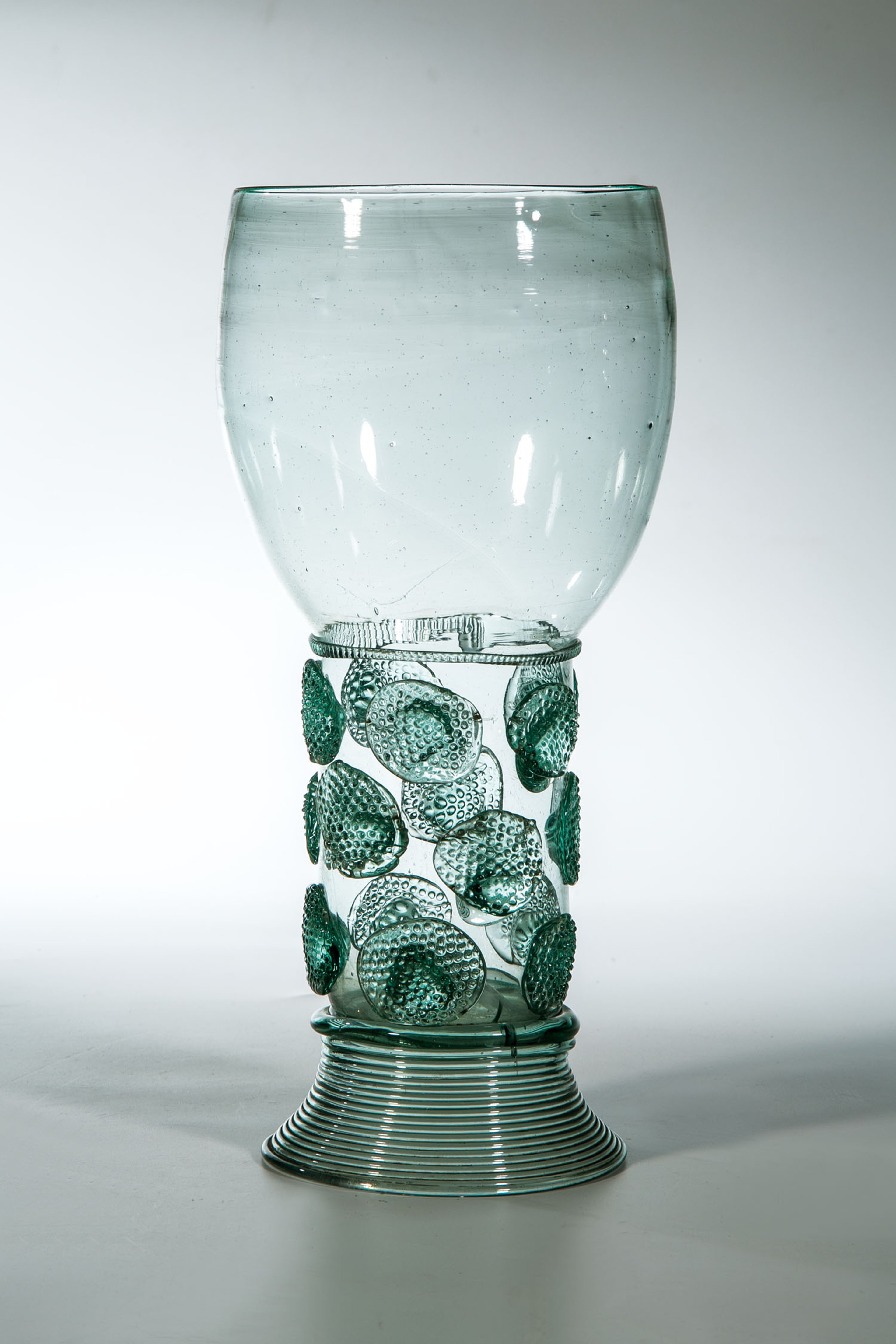
The Roemer – A Traditional Drinking Vessel
The Roemer is a traditional wine glass that developed in the sixteenth century from the so-called Berkemeyer and became widespread in Germany and the Netherlands in the seventeenth century. The Berkemeyer, a drinking vessel made of forest glass, with a conical bowl and a stem decorated with prunts, is considered the precursor of the Roemer.
The Roemer is characterised by its bulbous bowl, ribbed foot and thick, hollow stem adorned with small glass prunts known as berry prunts. These prunts were not merely decorative: as people often ate with their hands, they provided additional grip when fingers became greasy from food.
The forest glass used to make these vessels acquired its characteristic greenish tint from the naturally occurring iron content of the sand. It was produced in forest glassworks north of the Alps, where wood served both as fuel for the furnaces and as the source of the potash required for glassmaking.