 Art
27/03/2026
From 28 March: Pieter Claesz at the Alte Galerie in Schloss Eggenberg.

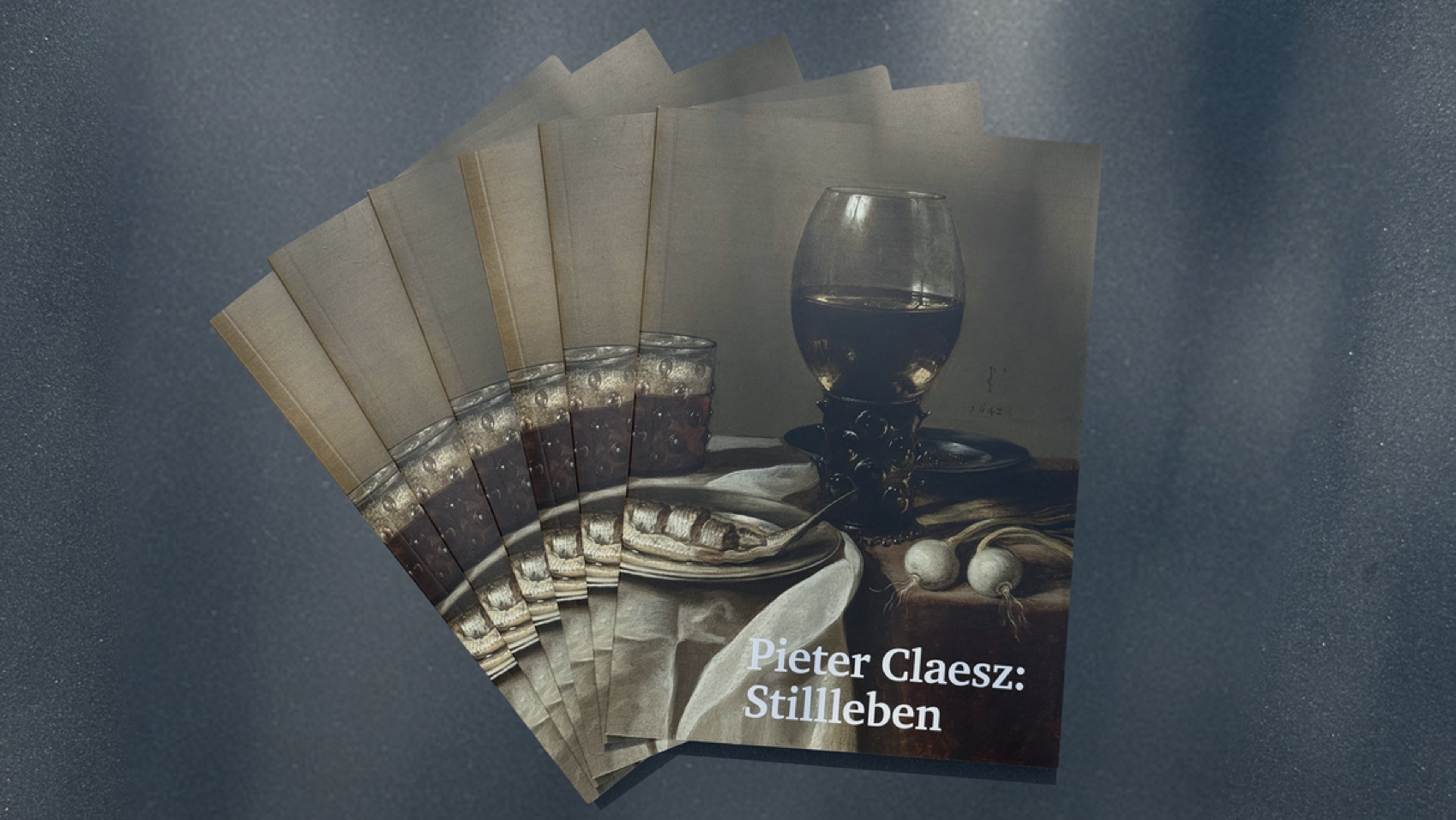
With the publication "Pieter Claesz: Still Life", the Kaiserschild Foundation documents the origins and conceptual foundations of Kaiserschild Art Defined. Art-historical research, digital art education and contemporary artistic perspectives engage in a dialogue within the publication, opening up new perspectives on the work of the Dutch still-life painter Pieter Claesz, as well as on the significance of digital technologies in the museum.
The publication takes as its starting point the travelling exhibition ‘Pieter Claesz: Still Life’, which brings together three works by the artist from the Alte Galerie Schloss Eggenberg, the Kunsthistorischen Museum in Vienna and the Kunst Museum Winterthur . The originals are complemented by high-resolution digital scans, which were produced as part of the Kaiserschild Art Defined project in collaboration with the participating museums. These form the basis for interactive educational formats that offer new insights into the painting techniques, materiality and visual language of the works.
The publication brings together contributions from renowned authors from various disciplines, thereby reflecting the diversity of the project. Stefan Albl, curator of the Early Modern period collection at the Alte Galerie, Eggenberg Palace; Sabine Pénot, curator of Old Dutch and Dutch painting at the Kunsthistorisches Museum, Vienna; and Andrea Lutz, head of the collection at the Kunst Museum Winterthur, offer art-historical perspectives on the work of Pieter Claesz and place his still lifes within their historical and collection-specific contexts.
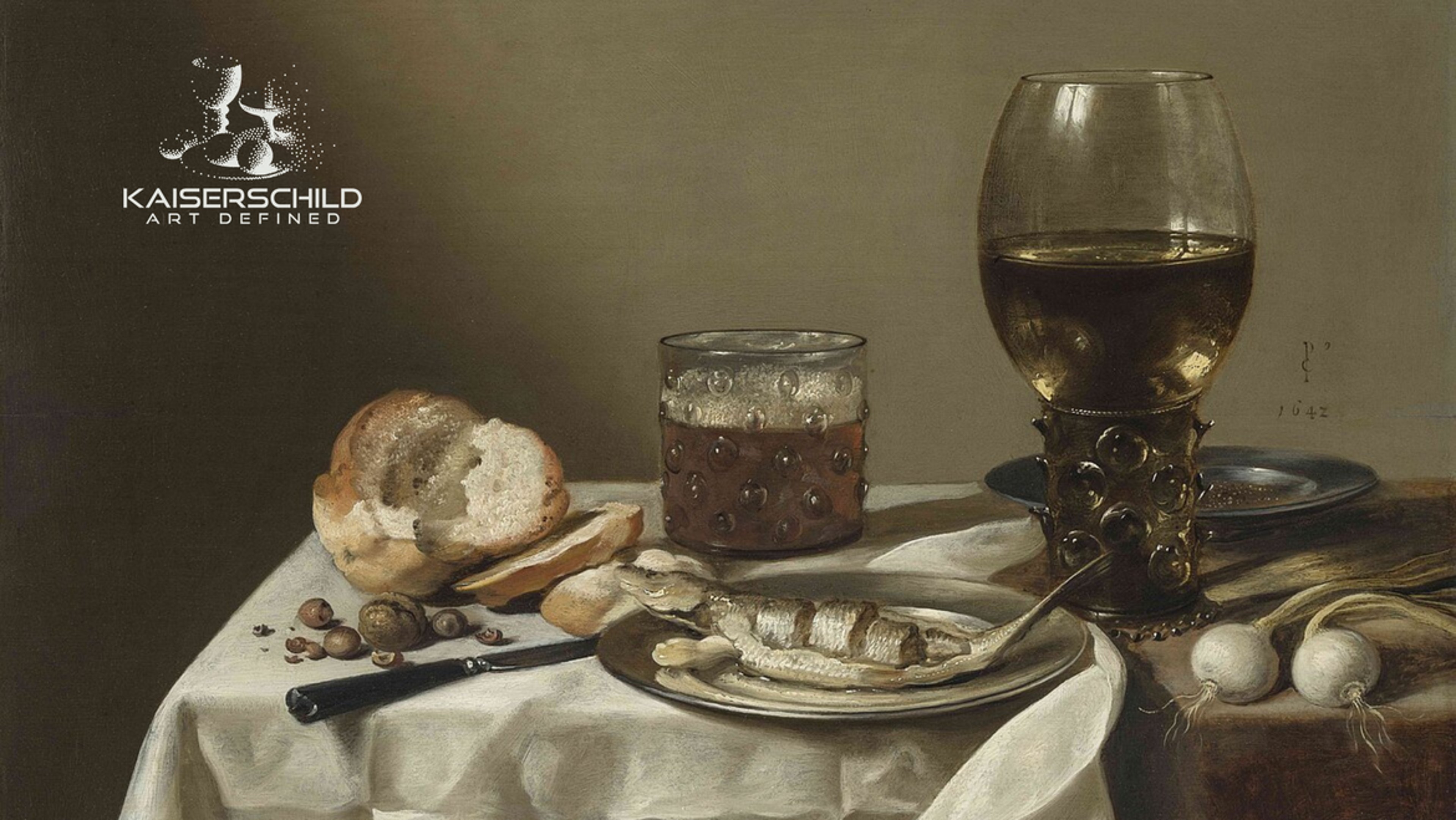
The artist duo Jana & JS contribute a contemporary perspective. As part of Kaiserschild Art Defined, they reinterpreted the painting ‘Still Life with a Glass Goblet’ (1642) from the Alte Galerie Schloss Eggenberg and transferred the historical motif onto the pavement in front of the New Town Hall in Linz in the form of a large-scale asphalt art intervention. Their contribution demonstrates how historical art can open up new realms of meaning through contemporary artistic approaches.
Sandra Sonnleitner and Stefan Mittlböck-Jungwirth-Fohringer explore the possibilities offered by digital art education. They describe how high-resolution digitised images, an interactive digital table and film-based educational formats complement the museum visit and enable new ways of engaging with art. The focus is on the interplay between the original and the digital copy. The digital dimension is not intended as a substitute for the original, but rather as an extension of its analytical accessibility and as a starting point for new aesthetic, emotional and scholarly experiences.
Furthermore, the publication makes it clear that Kaiserschild Art Defined is conceived as a long-term development project. The travelling exhibition is continuously refined at each of its venues. Different spatial, technical and curatorial conditions are incorporated into the optimisation of the digital educational formats and contribute to the sustainable development of contemporary art education.
The publication invites readers to explore Kaiserschild Art Defined beyond their visit to the exhibition and demonstrates how art history, research, digital innovation and contemporary art collectively open up new approaches to historical cultural heritage.
Available at the Alte Galerie, Eggenberg Palace.
ISBN: 978-3-903179-91-2
ArtFrom 28 March: Pieter Claesz at the Alte Galerie in Schloss Eggenberg.
 Art
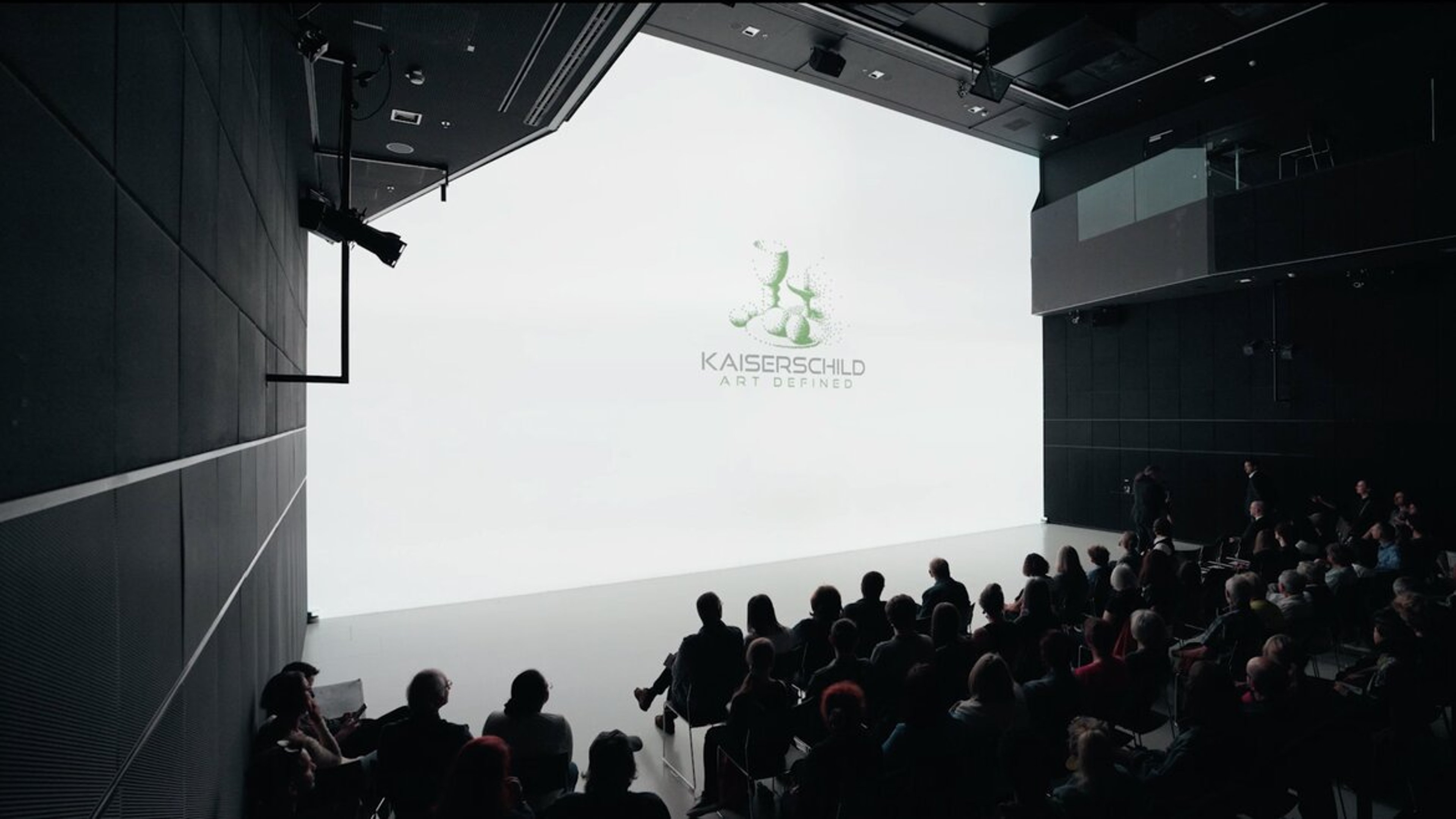
Experience Pieter Claesz’s masterpieces digitally at Ars Electronica Deep Space in Linz.
Image: © Michael Stanzer
A 400-year-old still life is being given a new home – right in front of the New Town Hall in Linz.